Why the metric everyone loves to hate still matters in my opinion

Every few weeks on LinkedIn, I’ll come a cross a post, aka hot take, declaring that engagement rate is ‘the worst metric in social media’, like ever! Mostly it is then brought up that view time, shares etc. are much more meaningful, and that blatantly everyone still relying on engagement rate SUCKS!
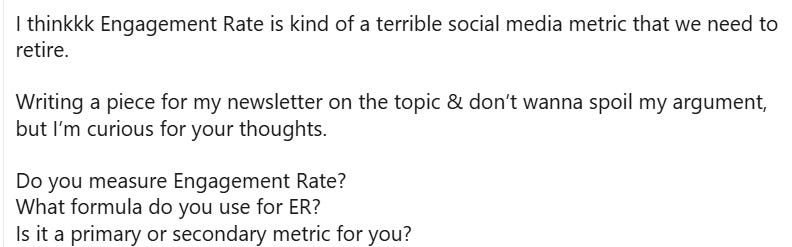
The argument usually goes like this, engagement rate rewards vanity interactions, ignores business impact, and pushes brands to chase interaction over tangible results. And to be fair, there is some truth in that. But writing it off as useless misses something important. But the conclusion that engagement rate is therefore useless misses something important.
Used properly, engagement rate is not a vanity metric. I’d actually argue that no metric is a vanity metric if not viewed in isolation, i.e. a growing following isn’t ‘just’ a vanity metric. First and foremost, you cannot decide on a metric being useless if you do not know the business and social media objectives – let’s start there.
A working example
I’ll try to illustrate this with an example I faced in the past year. I was tasked with developing an organic social media strategy, but also a measurement framework that could be applied to multiple brands, across multiple social media channels at very different points of maturity. One brand in particular has fallen into the trap of chasing virality, and it has done fairly successfully from a numbers perspective but what it couldn’t prove was actual long-term impact. Mentions of the brand were fairly low in the comments, and from an outsider the posts could have come from any brand or creator in the sector without being able to tell who this was about, meaning that millions of views were likely doing very little.
Another brand had an ‘outstanding’ engagement rate looking at reach versus the engagements. This account was also a nano account with just over 1k followers, so whilst the engagement rate was way above the accounts with the 6 or 7 figure following (let’s say around 10%) – based on the size of the account, it should have been way above that number.
However, leadership was expecting a similar engagement metric for the big accounts and believed that the small account did something right. In reality this wasn’t the case, as the small brand account didn’t reach outside its small audience – whereas the other accounts achieved this.
So my starting point was reviewing the business and marketing objectives and how the organic content and channel strategy can support this, providing practical steps to move forward, and worked out a way of telling the story with a set of metrics that were assigned to each of the, in this case, three objectives. All anchored deeply in the so what.
As a result of reworking the social strategy we were able to measure a tangible result aka content resonance for the audience – both increasing the engagement rate and increasing higher quality comments (which we defined in advance) and general engagement outside of the direct audience. With a bigger team, we could have probably become even more sophisticated in the way we measure the impact of different themes/ objectives – rather than looking at one blanket metric with supporting metrics to illustrate the results.
Metrics are there to paint a picture of the situation, see them as the colours you’re using to paint a picture. It is one of the clearest indicators we have of whether content actually resonates with an audience. And how it does and it’s key that additional metrics are in place to measure its success. I.e. what makes a high quality engagement, and on what type of post. This can be as simple as looking at comment volume, quality, clicks, saves or shares, and their percentage versus reach – but not all of them at once.
Engagement rate measures resonance, not relevance
Another misunderstanding comes from confusing relevance with resonance. Relevance is when the content appears in front of the right audience, at the right time, on the right topic. It earns attention because it makes sense in that context. So it is about what you’re talking about and where you are talking about it.
Resonance is what should happen next. Resonance in content is the ability of a message to create a deep emotional, intellectual, or personal connection with its intended audience, going beyond mere attention to spark recognition, relatability, and action.
So what are the signifiers of resonance? And lets look at this specifically from the social media lens and what we can easily measure. Resonant content creates a response. People react, comment, save, share, or pass it along (dark social).
Engagement rate is one of the few metrics that captures that difference. The other lever you can pull here is social listening BUT not every brand or account has the ability to analyse this as it tends to be more expensive.
To remember a post can capture attention, and therefore highly relevant on a platform and at the same time not resonate with the audience. It just doesn’t stick.
Why algorithms still care about engagement
Another reason engagement rate remains useful is simple, platforms themselves still treat engagement as a quality signal for the algorithm ranking.
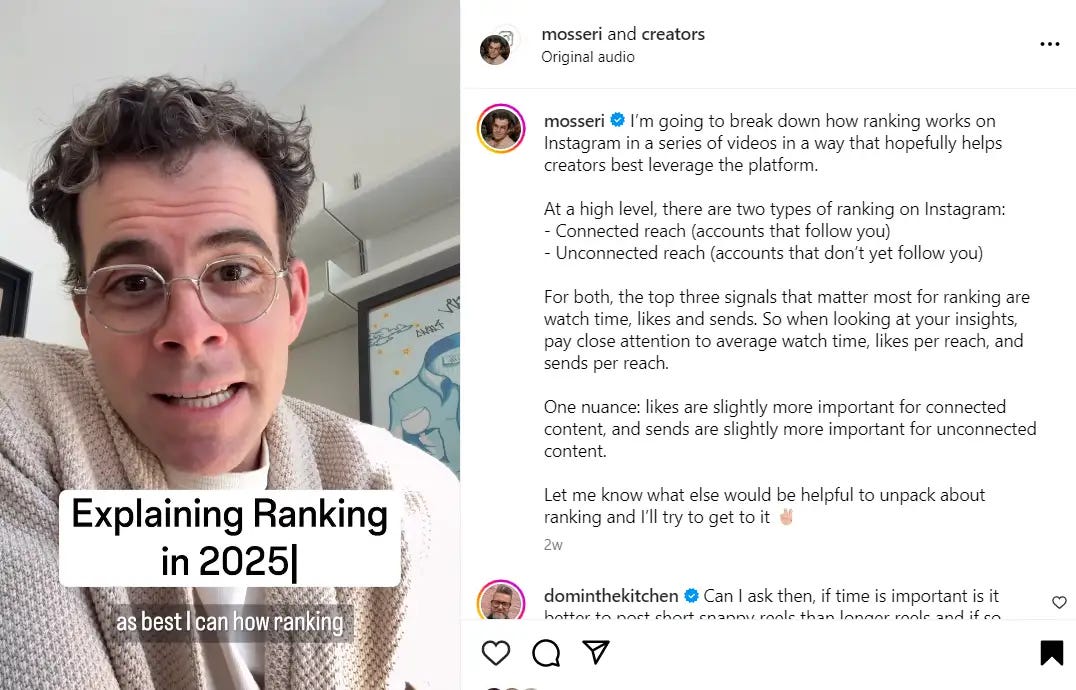
Instagram, for example, now effectively runs on two parallel distribution systems:
- Connected reach → people who already follow you
- Unconnected reach → people who don’t follow you yet (Explore, Reels, recommendations)
And the important nuance here is that not all engagement types are weighted the same. For both, key signals like watch time, likes and sends matter. But likes tend to carry slightly more weight when content is shown to your existing audience, whereas sends and shares are stronger signals when it comes to reaching new people. One shows that your audience enjoys your content, the other that it’s worth spreading beyond them.
Most ranking systems across major platforms consider some form of interaction when determining distribution. Meaning that engagement rate is not just a reflection of audience behaviour, it’s also how visibility is decided on a variety of platforms.
To add here, view time is an important metric that would be great to be able to report on better across social media platforms, but that is mostly reserved for paid campaigns and not so much for organic content unfortunately.
Where engagement rate goes wrong
The real problem appears when engagement rate becomes the only metric people care about. And are looking at it without considering the social media objective(s) or other metric that may support telling a better story.
Also if content is designed purely to provoke reactions (see ragebait for example) or encouraging superficial interactions rather than meaningful ones, engagement rate becomes detached from strategy.
What engagement rate is actually good for
Engagement rate works best when it sits alongside other indicators:
- reach and distribution metrics
- audience growth (yes! not a pure vanity metric either)
- traffic and downstream actions
- qualitative signals like comment quality or share behaviour
Seen in that wider context, engagement rate becomes a diagnostic tool rather than a scoreboard.
Additionally, it can also be adapted, so you weight certain types of engagement higher than others.
An example:
Weighted Engagement Rate=(0.10×Like Rate)+(0.20×Comment Rate)+(0.30×Share Rate)+(0.40×Click Rate)
This weighted engagement rate combines different engagement actions into a single score, weighting clicks most heavily, followed by shares, comments, and likes, while adjusting each by impressions so the result reflects relative impact rather than raw volume.
The metric isn’t the problem
So, when used thoughtfully, engagement rate can reveal a number of useful things:
- whether content resonates with the audience it reached
- whether creative formats are working (although I also wish there was a better way to report on view rate across the various social platforms)
- whether a message connects emotionally
In other words, engagement rate helps answer a question that many social strategies still struggle with:
Did the content actually land?
That question may sound simple, but it sits at the heart of effective social media. And it specifically caters to brands that are not able to report on social listening constantly, or at all.
And finally — (P.S. I decided on this em dash for impact, I’ve not used ChatGPT or other LLMs to write this) again, all of the above really depends on your social media objectives.
Further reading:
Social media algorithms: 2026 guide for every major network – Hootsuite
The Effectiveness Equation – Google Report
System 1 – The long & the short of it
++++++++GERMAN TRANSLATION++++++++
Eine Verteidigung der Engagement Rate
Warum die Metrik, die alle gern hassen, meiner Meinung nach immer noch relevant ist
Kat Ober
11. April 2026
Alle paar Wochen begegnet mir auf LinkedIn ein Post – meist als „Hot Take“ verpackt –, der erklärt, dass die Engagement Rate die schlechteste Metrik in Social Media überhaupt sei. Häufig wird dann argumentiert, dass View Time, Shares etc. deutlich aussagekräftiger seien und dass ganz offensichtlich alle, die sich noch auf die Engagement Rate verlassen, schlicht nicht verstanden haben, wie Social funktioniert.
Das Argument sieht meist so aus: Die Engagement Rate belohnt oberflächliche Vanity-Interaktionen, ignoriert den Business Impact und verleitet Marken dazu, Interaktion um der Interaktion willen zu jagen – statt messbare Ergebnisse zu erzielen. Und fairerweise: Da ist ein Körnchen Wahrheit drin. Aber sie deshalb pauschal als nutzlos abzutun, greift zu kurz.
Richtig eingesetzt ist die Engagement Rate keine Vanity Metric. Ich würde sogar behaupten, dass keine Metrik eine Vanity Metric ist, wenn sie nicht isoliert betrachtet wird – ein wachsendes Following ist zum Beispiel eben auch nicht „nur“ eine Vanity Metric. Vor allem aber: Man kann nicht beurteilen, ob eine Metrik sinnvoll oder sinnlos ist, ohne die zugrunde liegenden Business‑ und Social‑Media‑Ziele zu kennen. Genau dort sollte man anfangen.
Ein konkretes Beispiel
Ich möchte das anhand eines Beispiels aus dem vergangenen Jahr illustrieren. Ich war damit beauftragt, eine organische Social‑Media‑Strategie zu entwickeln – inklusive eines Messframeworks, das auf mehrere Marken, über verschiedene Plattformen hinweg und bei sehr unterschiedlichen Reifegraden anwendbar war.
Eine Marke war besonders stark in die Falle der Viralität getappt. Rein zahlenmäßig war das durchaus erfolgreich. Was sie aber nicht belegen konnte, war ein tatsächlicher langfristiger Effekt. Marken‑Mentions in den Kommentaren waren gering, und für Außenstehende hätten die Posts genauso gut von jeder anderen Marke oder jedem Creator aus der Branche stammen können. Millionen von Views, die am Ende wahrscheinlich kaum Wirkung entfalteten.
Eine andere Marke wiederum wies eine „herausragende“ Engagement Rate auf, gemessen an Reichweite versus Interaktionen. Allerdings handelte es sich hier um einen Nano‑Account mit etwas über 1.000 Followern. Zwar lag die Engagement Rate deutlich über der von Accounts mit sechs- oder siebenstelliger Followerzahl (etwa bei 10 %), doch gemessen an der Accountgröße hätte sie eigentlich noch deutlich höher liegen müssen.
Die Führungsebene erwartete jedoch vergleichbare Engagement‑Werte für die großen Accounts und ging davon aus, dass der kleine Account etwas „richtig“ mache. In Wirklichkeit war das nicht der Fall: Der kleine Account erreichte kaum Menschen außerhalb seiner bestehenden Community – während die größeren Accounts genau das schafften.
Mein Ausgangspunkt war daher, zunächst die Business‑ und Marketingziele sauber zu definieren und zu prüfen, wie organische Inhalte und die Channel‑Strategie diese Ziele unterstützen können. Darauf aufbauend habe ich einen Messansatz entwickelt, der die Geschichte mit einer klaren Auswahl an Metriken erzählt – jeweils direkt verknüpft mit den (in diesem Fall drei) definierten Zielen und immer mit einem klaren So what?.
Als Ergebnis der überarbeiteten Social‑Strategie konnten wir einen konkreten Effekt messen – nämlich Content‑Resonanz. Sowohl die Engagement Rate als auch die Qualität der Kommentare (die wir vorab definiert hatten) stiegen. Gleichzeitig nahm auch die Interaktion außerhalb der bestehenden Zielgruppe zu. Mit einem größeren Team hätten wir die Wirkung einzelner Themen oder Ziele vermutlich noch granularer messen können, statt mit einer übergeordneten Metrik plus unterstützenden Metriken zu arbeiten.
Metrics als Diagnose, nicht als Selbstzweck
Metriken helfen dabei, ein Bild der Situation zu zeichnen – man kann sie sich wie Farben vorstellen, mit denen man malt. Sie gehören zu den klarsten Indikatoren dafür, ob Inhalte bei einer Zielgruppe tatsächlich Resonanz erzeugen. Entscheidend ist dabei, wie diese Resonanz aussieht, und dass ergänzende Metriken genutzt werden, um Erfolg richtig einzuordnen: etwa, was als qualitativ hochwertige Interaktion gilt und bei welchem Content‑Typ. Das kann so simpel sein wie ein Blick auf Kommentarvolumen, ‑qualität, Klicks, Saves oder Shares – jeweils im Verhältnis zur Reichweite. Aber nicht alles gleichzeitig.
Engagement Rate misst Resonanz, nicht Relevanz
Ein weiteres Missverständnis entsteht, wenn Relevanz und Resonanz gleichgesetzt werden. Relevanz bedeutet, dass ein Inhalt der richtigen Zielgruppe, zum richtigen Zeitpunkt und zum richtigen Thema ausgespielt wird. Er erhält Aufmerksamkeit, weil er in diesem Kontext Sinn ergibt – es geht also darum, was man sagt und wo man es sagt.
Resonanz ist das, was danach passiert. Resonanz beschreibt die Fähigkeit eines Inhalts, eine emotionale, intellektuelle oder persönliche Verbindung herzustellen – über reine Aufmerksamkeit hinaus, bis hin zu Wiedererkennung, Identifikation und Handlung.
Und woran erkennt man Resonanz, speziell aus Social‑Media‑Perspektive? Resonanter Content löst eine Reaktion aus. Menschen reagieren, kommentieren, speichern, teilen oder verbreiten ihn weiter (auch im Dark Social).
Die Engagement Rate ist eine der wenigen Metriken, die diesen Unterschied abbilden kann. Eine weitere Möglichkeit wäre Social Listening – allerdings steht diese Option nicht jeder Marke oder jedem Account zur Verfügung, da sie meist kostenintensiver ist.
Wichtig ist: Ein Post kann Aufmerksamkeit erzeugen und damit hoch relevant für eine Plattform sein – und dennoch keine Resonanz auslösen. Er bleibt nicht hängen.
Warum Algorithmen weiterhin Engagement berücksichtigen
Ein weiterer Grund, warum Engagement Rates nach wie vor relevant sind: Plattformen selbst nutzen Engagement weiterhin als Qualitätssignal für ihre Ranking‑Algorithmen.
Instagram etwa arbeitet inzwischen mit zwei parallelen Distributionslogiken:
Connected Reach → Menschen, die dir bereits folgen
Unconnected Reach → Menschen, die dir noch nicht folgen (Explore, Reels, Empfehlungen)
Der entscheidende Punkt dabei: Nicht jede Interaktionsform wird gleich gewichtet. Für beide Reichweitenarten spielen Signale wie Watch Time, Likes und Sends eine Rolle. Likes wiegen tendenziell stärker, wenn Inhalte der bestehenden Community ausgespielt werden, während Sends und Shares wichtigere Signale für Reichweite außerhalb der eigenen Followerschaft sind. Das eine zeigt, dass deine Community den Content mag – das andere, dass er es wert ist, weiterverbreitet zu werden.
Die meisten großen Plattformen berücksichtigen irgendeine Form von Interaktion bei der Verteilung von Content. Engagement Rate ist damit nicht nur ein Spiegel des Nutzerverhaltens, sondern auch ein Faktor dafür, wie Sichtbarkeit entsteht.
Ergänzend: View Time ist eine extrem wertvolle Metrik, die man gern differenzierter reporten würde. Leider ist sie auf den meisten Plattformen vor allem für Paid‑Kampagnen verfügbar und weniger für organischen Content.
Wo die Engagement Rate problematisch wird
Problematisch wird es dann, wenn die Engagement Rate zur einzigen Metrik wird – und losgelöst von Social‑Media‑Zielen oder unterstützenden Metriken betrachtet wird.
Auch wenn Content gezielt darauf ausgelegt ist, Reaktionen zu provozieren (Stichwort Ragebait) oder oberflächliche Interaktionen zu fördern, entkoppelt sich die Engagement Rate von der eigentlichen Strategie.
Wofür die Engagement Rate tatsächlich gut ist
Am besten funktioniert die Engagement Rate im Zusammenspiel mit anderen Indikatoren:
- Reichweiten‑ und Distributionsmetriken
- Wachstum der Zielgruppe (ja – auch das ist keine reine Vanity Metric)
- Traffic und nachgelagerte Aktionen
- qualitative Signale wie Kommentarqualität oder Share‑Verhalten
In diesem Kontext wird die Engagement Rate zu einem Diagnose‑Tool statt zu einer Rangliste.
Zusätzlich lässt sie sich anpassen, indem bestimmte Interaktionsarten höher gewichtet werden als andere.
Beispiel:
Gewichtete Engagement Rate =
(0,10 × Like‑Rate) + (0,20 × Kommentar‑Rate) + (0,30 × Share‑Rate) + (0,40 × Klick‑Rate)
Diese gewichtete Engagement Rate kombiniert verschiedene Interaktionen zu einem Score, wobei Klicks am stärksten gewichtet werden, gefolgt von Shares, Kommentaren und Likes. Jede Komponente wird dabei auf Impressions bezogen, sodass relative Wirkung statt absoluter Menge abgebildet wird.
Das Problem ist nicht die Metrik
Richtig eingesetzt kann die Engagement Rate hilfreiche Antworten liefern:
- ob Content bei der erreichten Zielgruppe resoniert
- ob Formate funktionieren (auch wenn ich mir bessere plattformübergreifende Reporting‑Optionen zur View Rate wünschen würde)
- ob eine Botschaft emotional anschließt
Anders gesagt:
Die Engagement Rate hilft, eine Frage zu beantworten, an der viele Social‑Strategien scheitern:
Ist der Content wirklich angekommen?
Diese Frage klingt simpel, trifft aber den Kern wirksamer Social‑Media‑Arbeit – insbesondere für Marken, die kein kontinuierliches Social Listening betreiben können oder wollen.
Und zum Schluss — (P.S. Ich habe mich bewusst für diesen Gedankenstrich entschieden. Dieser Text wurde nicht mit ChatGPT oder anderen LLMs geschrieben) — gilt wie immer: All das hängt maßgeblich von euren Social‑Media‑Zielen ab.
Danke fürs Lesen von The feed is the mirror! Abonniert kostenlos, um neue Beiträge zu erhalten und meine Arbeit zu unterstützen.